Loading...
Serving New Brunswick, NJ and surrounding areas. (732) 633-0675
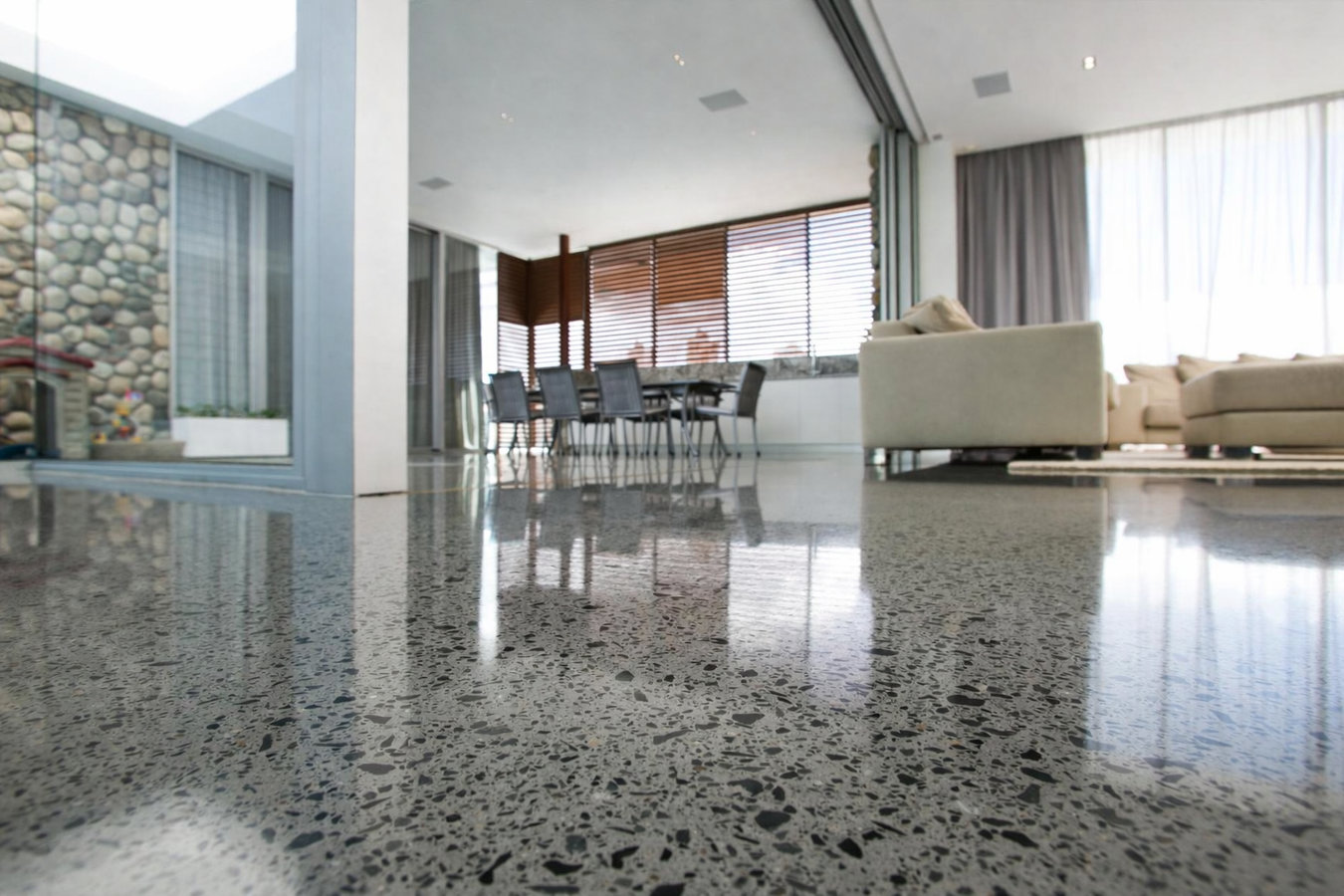
A crumbling basement floor or a cracked garage slab makes the space unusable and gets worse every winter. We install concrete floors built for New Jersey conditions - with the moisture protection and proper thickness that make them last.
Concrete floor installation in New Brunswick means preparing and compacting the ground, installing a moisture barrier, pouring a properly mixed slab, finishing the surface, and cutting control joints - most residential jobs take one day to pour, with light foot traffic safe after 24 to 48 hours.
If your basement floor is crumbling, your garage slab is cracked and stained, or you are trying to finish a lower level that has always been too rough or uneven to use, a new pour solves the problem at the source. New Brunswick has a large stock of homes built before 1960, and many of them have original basement slabs that are simply past their useful life. Old floors are demolished, hauled away, and replaced - not patched over. When the outdoor work is also on your list, many homeowners combine floor installation with a garage floor concrete project at the same visit.
New Jersey requires home improvement contractors to be registered with the state Division of Consumer Affairs. Verify any contractor before signing - and make sure they pull a permit for your floor work rather than asking you to skip it.
If you can kick loose chunks of concrete with your foot, or the surface is peeling in layers, the floor has deteriorated past the point of patching. This is especially common in New Brunswick homes built before the 1960s, where original basement slabs have simply reached the end of their lifespan. Repeated patching at this stage is a waste of money.
Puddles forming in low spots after a wet New Jersey winter or a heavy spring rain mean your floor is no longer level - or never was. Standing water in a basement or garage accelerates concrete damage and creates conditions for mold. A new floor with proper grading and a moisture barrier solves both problems.
Small hairline cracks are normal in older concrete. But if you can feel a ridge where one side of a crack is higher than the other, or if a crack is wider than roughly a quarter inch, the floor has moved - likely from soil settling or frost heave. That kind of damage does not improve on its own and usually means replacement.
Years of vehicle traffic, road salt dragged in from New Jersey winters, and oil drips break down a garage slab from the surface down. Soft or crumbly patches, or a surface that feels rough and pitted rather than solid, mean the concrete has been compromised. A fresh slab restores structural integrity and gives you a surface that is easy to maintain.
We handle every step from demolition to final curing. That means breaking out and hauling away any old slab, grading and compacting the ground, installing a moisture barrier before the pour, and finishing the surface to the texture you need - whether that is a smooth finish for a basement being converted to living space, or a slightly rougher broom finish for a garage. Control joints are cut into every slab to guide any future cracking into straight, planned lines rather than random cracks across the floor. For homeowners who want a pool area or outdoor space finished at the same time, we also offer concrete pool decks as part of a combined project.
Thickness is one of the decisions you make at the estimate stage. A standard residential floor slab runs four inches for most uses, but a garage floor that holds vehicles should be five to six inches. We recommend the right thickness based on what you are using the space for, and that recommendation shows up in your written quote so you know exactly what you agreed to.
Ideal for older New Brunswick homes where the original slab has crumbled, shifted, or been a source of moisture issues for years.
A five- to six-inch slab built for vehicle weight and the road salt that comes in on tires every New Jersey winter.
Old concrete is broken up, hauled off-site, and disposed of before any new material goes in - you start completely fresh.
A plastic sheeting vapor barrier is installed under every slab to keep ground moisture from wicking up into the concrete over time.
New Brunswick has a large stock of homes built before 1960, and replacing a basement floor in one of these properties almost always means demolishing the original slab first. Those older floors were often poured thinner than current standards, directly on bare soil, without any moisture protection underneath. Once they come up, it is common to find uneven or soft soil below that needs to be compacted before a new floor can go in. That adds time - and cost - compared to a new pour on clean ground. If your home falls in this category, budget for demolition as part of the project.
Parts of New Brunswick also sit near the Raritan River, and lower-lying neighborhoods can have naturally high water tables or clay-heavy soil that holds moisture. A moisture barrier under the slab is not optional in these areas - it is what stands between your floor and ongoing water damage. We serve homeowners throughout New Brunswick and nearby communities, including Piscataway and Trenton, and we know the ground conditions in this part of Middlesex County.
We ask about the space, what it is used for, whether there is an existing floor to remove, and any moisture history. We respond within 1 business day. A site visit is required before any firm quote - concrete jobs quoted without seeing the space routinely change once the contractor shows up.
You receive a written, itemized estimate covering demolition, moisture barrier, thickness, finishing, and cleanup. We handle the permit application with the city - budget a week or two for processing, especially in spring and summer when the construction office is busiest.
If there is an old slab, the crew breaks it up and hauls it away. They then grade and compact the ground, install the moisture barrier, and set up the forms. This prep work is what you never see but what determines whether the finished floor stays flat and crack-free.
The concrete is poured, spread, finished, and cut with control joints the same day. Light foot traffic is safe in 24 to 48 hours. Avoid heavy loads for a week, and wait the full 28 days before parking vehicles on a garage slab. The city inspector will schedule final sign-off.
We respond within 1 business day. There is no obligation - getting an estimate costs you nothing. After you submit, someone from our office will call to schedule a time to see the space.
(732) 633-0675New Brunswick has more older homes than most of Middlesex County. We understand what a basement floor replacement actually involves in a house that was built in 1940 - the demolition, the soil conditions underneath, the moisture questions that come up. This is routine work for us, not an unusual situation.
We install a plastic vapor barrier under every slab before the pour. In New Brunswick - especially near the Raritan River corridor - skipping this step is how a floor that looks fine on day one starts failing within a few years. It is not an upgrade for us; it is the standard.
New Jersey requires home improvement contractor registration for this work, and New Brunswick requires permits. We handle both so your project is on the record, inspected by the city, and documented for future buyers. Verify contractor registration at NJ Division of Consumer Affairs.
A basement storage floor and a garage slab holding a truck need different thicknesses. We spec the right depth for your use case and put it in writing before the pour, so you are not surprised by cracks caused by an undersized slab.
These are not talking points - they are the actual things that determine whether your floor holds up after the first New Jersey winter. We build them that way from the start.
For New Jersey contractor registration, visit the NJ Division of Consumer Affairs - Home Improvement Contractor Registration. For New Jersey building code standards, see the NJ Department of Community Affairs Division of Codes and Standards.
Outdoor concrete surfaces for pool surrounds - a natural companion project when you are also finishing interior concrete spaces.
Learn moreDedicated garage slab work for homeowners whose primary need is a vehicle-ready surface built for salt and heavy loads.
Learn moreSpring booking slots in Middlesex County fill fast - contact us now and get your project on the schedule before the season rush.