Loading...
Serving New Brunswick, NJ and surrounding areas. (732) 633-0675
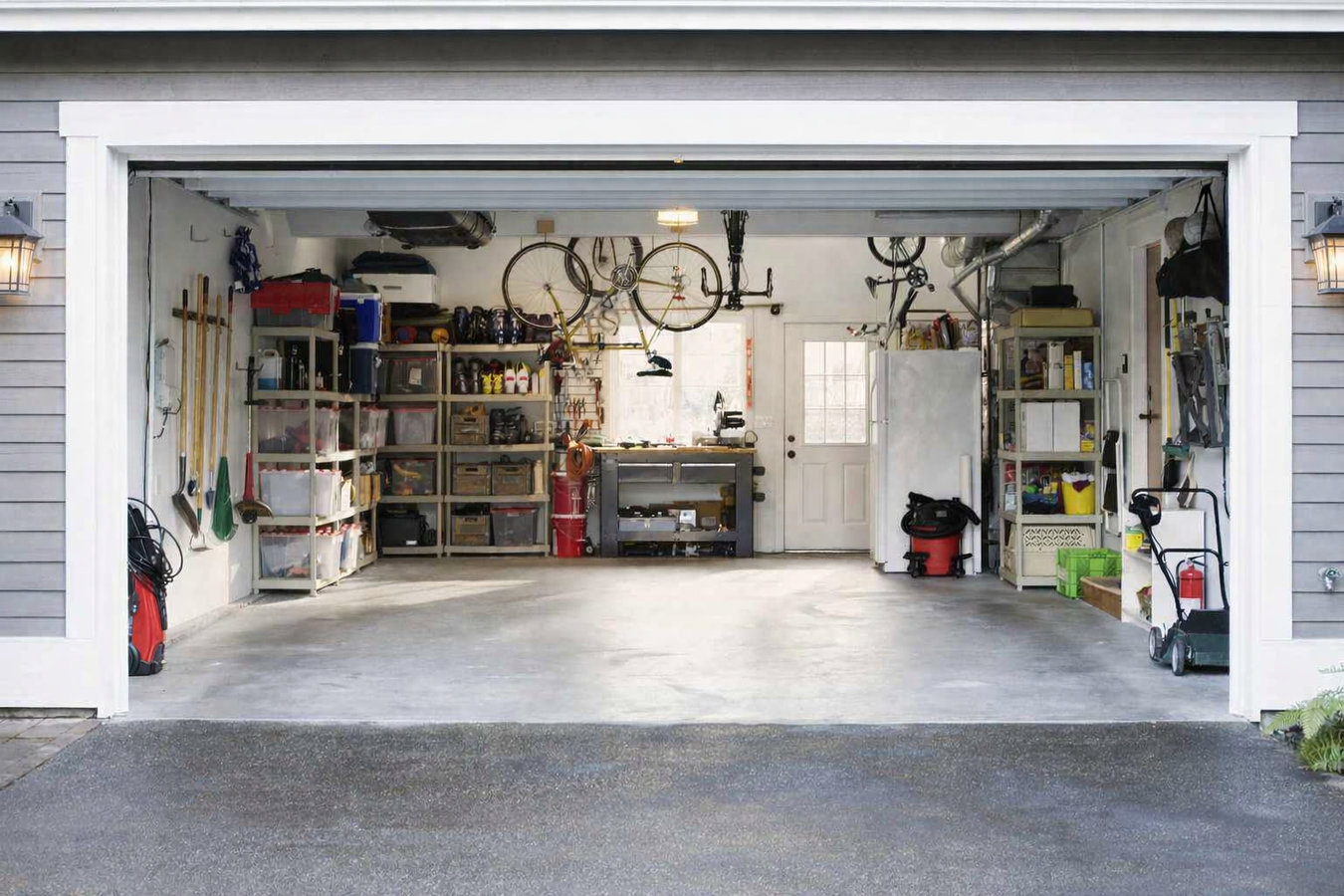
Old slab flaking or cracking from freeze-thaw damage? We replace and pour garage floor concrete that handles New Jersey winters, heavy vehicles, and road salt year after year.
Garage floor concrete in New Brunswick involves removing the old slab, prepping and compacting the ground, and pouring a fresh reinforced concrete floor - most single-car garage replacements take one to two active work days, with a seven-to-ten-day curing period before vehicle use.
New Brunswick sits in a climate zone where freeze-thaw cycles hit concrete hard. Most of the housing stock here was built in the mid-20th century, which means many garage slabs were poured thin and without the reinforcement methods used today. If your floor is flaking, cracking, or collecting puddles, those are signs the slab has reached the end of its useful life.
Many of our garage floor customers also ask about decorative concrete finishes or coatings once the new slab is fully cured. Road salt tracked in from New Brunswick streets is one of the fastest ways to degrade an unprotected surface, so a sealed or coated floor is often the smarter long-term investment.
If the top layer of your floor is peeling away in thin chips every spring, that is freeze-thaw damage from road salt tracked in by your tires. Once flaking starts it spreads, and patching only delays the problem. A full replacement gives you a clean, solid surface.
If you can fit a coin into a crack, or cracks are growing longer over time, the slab is failing. In New Brunswick's older housing stock, many of these cracks trace back to a floor poured thin decades ago that has been stressed by repeated freeze-thaw cycles.
A properly poured garage floor is slightly sloped toward the door so water drains out. Puddles sitting in the middle or corners mean the floor has settled unevenly or was never poured correctly. Standing water accelerates concrete damage and can work under the slab.
If you knock on your garage floor and hear a hollow sound, or it feels springy, the concrete may have separated from the ground beneath it. This happens when soil shifts or erodes - something more common in New Brunswick's older, densely developed lots where fill material was used.
We handle every part of the garage floor project: breaking out and hauling away the old slab, grading and compacting the ground to a stable base, installing reinforcement mesh or rebar, and pouring and finishing the new concrete to the right thickness for your use case. If you need a standard four-inch residential slab or something heavier for a truck or commercial space, we size the pour accordingly. We also work alongside homeowners who want to add a concrete floor installation in adjacent spaces like a basement or workshop at the same time.
For customers who want more than a plain gray slab, we can discuss surface options after the concrete has fully cured, including sealed finishes that resist the road salt and moisture that New Brunswick winters bring. Ask about coating and sealing when you request your estimate.
Best for floors that are cracking, heaving, or showing years of freeze-thaw damage throughout.
Ideal for garages with a gravel or dirt floor being converted to a finished concrete surface.
Suited for customers who park trucks, RVs, or heavy equipment and need extra thickness and internal reinforcement.
For garages where drainage is a concern - we can pour with the correct slope so water does not pool at the back.
New Brunswick sits in a climate zone where temperatures regularly drop below freezing in winter and climb into the 90s in summer. That repeated freezing and thawing is one of the main reasons garage floors crack and flake over time - the concrete expands and contracts with every cycle. Combine that with the road salt and de-icing chemicals tracked in from heavily treated New Brunswick streets every winter, and an unprotected or poorly poured slab deteriorates much faster here than in warmer climates.
Much of New Brunswick's housing stock was built in the mid-20th century, and many garages still have original slabs from the 1950s, 60s, and 70s - poured thin and without the reinforcement methods standard today. Urban lot conditions in dense neighborhoods also mean soil conditions under garage slabs can be unpredictable. Homeowners in neighboring Piscataway and Edison deal with the same Middlesex County clay soils and freeze-thaw wear, and we serve both areas regularly.
We respond within 1 business day to ask a few basic questions about your garage size and current floor condition, then schedule a free on-site visit.
We walk through your garage, look at the existing slab, and check ground conditions. You get a written estimate covering demo, disposal, materials, and labor - no surprises.
The crew breaks out the old slab, hauls it away, compacts the ground, and pours the new reinforced slab. Active work takes one to two days.
The slab needs at least seven days before vehicle use. We walk through the finished job with you, cover care instructions, and confirm what the work warranty covers.
We respond within 1 business day. There is no obligation - just a free on-site visit where we look at your garage, answer your questions, and give you a written number. After you submit, someone from our office will call to schedule the estimate at a time that works for you.
(732) 633-0675New Jersey requires all home improvement contractors to register with the state Division of Consumer Affairs. We are fully registered, which means you have real recourse if anything is not right - not just a handshake promise.
We know the local soil conditions, freeze-thaw patterns, and older housing stock of New Brunswick and surrounding Middlesex County cities. That local knowledge shapes how we prep the base on every job.
Your estimate covers demolition, disposal, base prep, materials, and labor before any work starts. No surprise line items halfway through the project - you know the number before we pull out a single tool.
The ground under your slab is what determines whether the floor holds up for 20 years or fails in two. We compact and grade the base on every job, and we can explain exactly what we are doing and why - as the American Concrete Institute guidelines recommend.
Every garage floor we pour is backed by a contractor who is registered, insured, and accountable under New Jersey law. Proper base preparation and the right concrete mix for this climate are not upsells - they are what separates a floor that lasts from one you replace again in five years. Learn more about concrete best practices at the American Concrete Institute.
Add color, texture, or a stamped pattern to your garage floor after the slab has fully cured.
Learn moreInterior floor slabs for workshops, basements, and commercial spaces with a smooth, level finish.
Learn moreSpring and summer slots fill fast in New Brunswick - call today to lock in your date before the good weather is gone.