Loading...
Serving New Brunswick, NJ and surrounding areas. (732) 633-0675
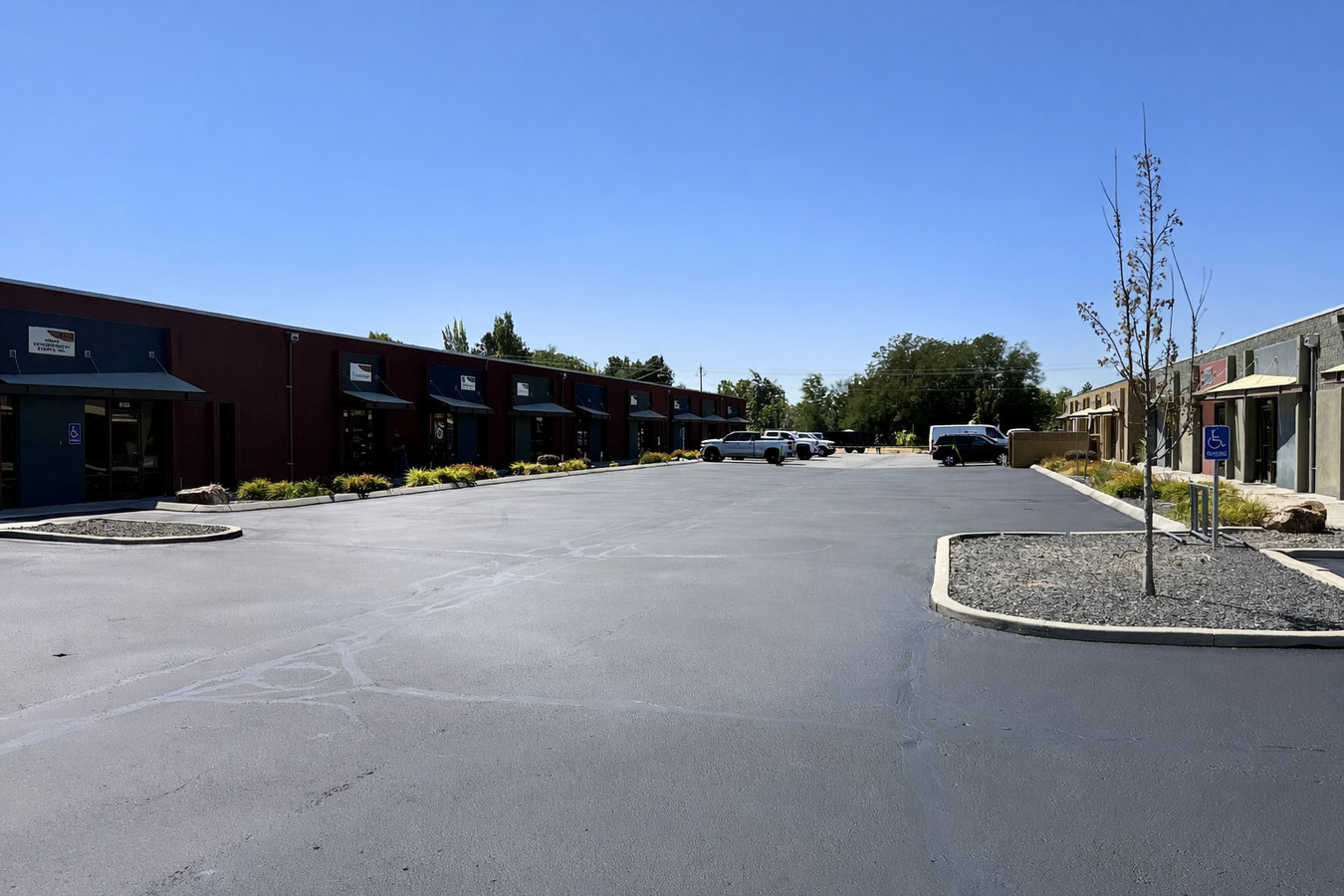
Cracked, uneven, or poorly drained parking surfaces do not fix themselves. We build concrete parking lots in New Brunswick from the base up - permitted, graded correctly, and built to survive New Jersey winters year after year.
Concrete parking lot building in New Brunswick means removing what is currently on the ground, preparing a compacted stone base, pouring a reinforced concrete slab with control joints and proper drainage slope - most residential and small commercial lots are completed in two to five days from excavation through pour.
If your parking area is cracked, heaved from winter frost, or drains poorly, a new concrete lot is a long-term fix rather than another round of patching. Concrete lasts far longer than asphalt and requires very little ongoing maintenance beyond occasional sealing. Many property owners in New Brunswick also look at concrete driveway building at the same time, since both projects share the same base prep and pour process.
New Brunswick requires a permit for new paved surfaces. We handle the permit application and drainage review with the city, so you are not left navigating that process on your own.
If you walk your parking area in early spring and find cracks that were not there last fall, or sections that have shifted up or sunk down, freeze-thaw damage has set in. In New Brunswick's climate, this kind of damage tends to get worse each year rather than stabilizing on its own. Once the surface is broken up, water gets in more easily and the problem accelerates.
If puddles sit on your parking area for hours after a rainstorm, the surface either was not graded properly or has settled unevenly over time. Standing water is hard on any paved surface and creates a slip hazard. A new concrete lot with proper drainage built in solves this problem permanently, and New Brunswick's stormwater permit requirements mean the drainage plan is reviewed before work begins.
Many older New Brunswick properties have unpaved or partially paved lots that turn muddy in wet weather, track debris into the street, or create dust in dry weather. Converting to concrete adds a clean, durable surface that holds up year-round without constant grading or gravel replenishment. It is a one-time investment rather than an ongoing maintenance cost.
Concrete parking lots built in the 1990s or earlier are approaching or past the end of their typical service life, especially without regular sealing. If you are seeing widespread surface flaking, multiple cracks running in different directions, or sections that feel soft or hollow underfoot, the lot is telling you that patching is no longer the right answer.
We handle every phase of concrete parking lot building from start to finish - demolition and removal of any existing surface, excavation, grading and compaction of the crushed stone base, form setting, reinforced concrete pour, control joint cutting, and finish work. Every lot we build includes a deliberate drainage slope so that water runs off toward a safe outlet rather than pooling on the surface. This is required by New Brunswick city permit review, and it is also just the right way to build a lot that will not deteriorate. For properties that need exterior flatwork beyond just parking, we also handle concrete footings and other structural concrete work on the same site visit.
Urban lots in New Brunswick present real challenges - tight access for concrete trucks, buried debris from prior structures, and soft ground in areas with historical fill near the Raritan corridor. We visit every site before quoting so the estimate reflects the actual conditions, not a best-case assumption. A price that looks good on paper but does not account for access difficulty or old buried material is not a reliable number.
For properties with gravel, dirt, or no parking surface - a complete build from excavation through finished concrete with permit and drainage design.
For existing concrete or asphalt lots that have cracked, heaved, or deteriorated beyond patching - removal, base rebuild, and fresh pour.
For property owners near Rutgers, the medical district, or commercial corridors who need a durable, ADA-compatible paved surface that meets city requirements.
For owners adding parking to a property - matching the new section to an existing surface and ensuring consistent drainage across both areas.
New Brunswick is a dense urban city with narrow streets, tight lot lines, and a history that means plenty of properties have old buried material just below the surface. Getting a concrete truck and heavy equipment into a tight city block takes planning, and some contractors charge more for difficult access or bring equipment that is not suited to the job. The city also sits in a climate zone where freeze-thaw cycles are a real threat to any paved surface that was not built with the right mix and base depth for central New Jersey winters. A lot that looks fine at installation can start showing damage within two or three years if those conditions were not accounted for upfront. New Jersey also has strict stormwater management requirements that apply to new paved surfaces - meaning every new lot needs a drainage plan reviewed by the city before a permit is issued.
We build concrete parking lots throughout the New Brunswick area, including Piscataway and Edison. Both communities have the same Middlesex County climate exposure, and we are familiar with the local permit and inspection processes in each.
We schedule a visit to your property - not a phone quote, an actual visit. We look at the existing surface, check equipment access, and ask how the lot will be used and what vehicles will park there. You hear back within one business day with a written estimate that covers all the work.
After you approve the estimate, we apply for the required building permit through New Brunswick's construction office. We handle the drainage review paperwork and keep you updated. Permit approval typically takes one to three weeks - we build this into the schedule so it does not surprise you.
On the first day of work, the crew removes the existing surface and excavates to the correct depth. We bring in crushed stone and compact it to create a stable, well-draining base. Expect noise and equipment - this phase usually runs one to two days and it is the most important work of the whole project.
Once the base passes inspection, the concrete truck arrives and we pour and finish the slab - cutting control joints at regular intervals. The pour itself usually finishes in a single day. Plan to keep vehicles off the surface for at least seven days, and heavy vehicles for up to 28 days. We walk you through the finished lot and provide the closed permit documentation.
We visit your property in person before quoting - so the price you get is the price you pay. No obligation.
(732) 633-0675Urban lots in New Brunswick have variables - tight access, old buried material, drainage constraints - that cannot be priced accurately from a photo. Every estimate starts with an in-person site visit, so the number we give you reflects the actual conditions on your property.
New Brunswick requires a permit and drainage review for new paved surfaces. We file the application, address city feedback, and deliver a closed permit when the work is done. You do not have to navigate the city's construction office on your own.
We use concrete mixes and base depths suited to central New Jersey's climate. A lot built here needs to handle repeated freeze-thaw cycles, and contractors who treat it like a warmer-climate project leave you with a surface that cracks within a few winters.
We have completed parking lot and flatwork projects throughout Middlesex County and neighboring areas. Local crews mean faster scheduling, no travel surcharges, and crews who already know what the ground and the permit offices here require. You can verify our New Jersey Home Improvement Contractor registration through the NJ Division of Consumer Affairs.
The right contractor for a New Brunswick parking lot is one who has stood on your property, understands the local stormwater requirements, and gives you a number that does not change on day two. That is the standard we hold ourselves to on every project.
For authoritative guidance on concrete pavement design and durability standards, see the American Concrete Pavement Association. New Jersey stormwater management requirements for new impervious surfaces are outlined by the NJ Department of Environmental Protection.
Structural footings for decks, additions, and outbuildings - dug to the correct frost depth and permitted through New Brunswick.
Learn moreResidential driveway installations using the same base preparation and pour process as parking lots, sized and graded for your property.
Learn morePermit season fills up fast - contact us today to lock in your start date before the next weather window closes.