Loading...
Serving New Brunswick, NJ and surrounding areas. (732) 633-0675
Adding a garage, a ground-floor addition, or an accessory structure? We build slab foundations in New Brunswick that are permitted, properly reinforced, and prepared for NJ winters.
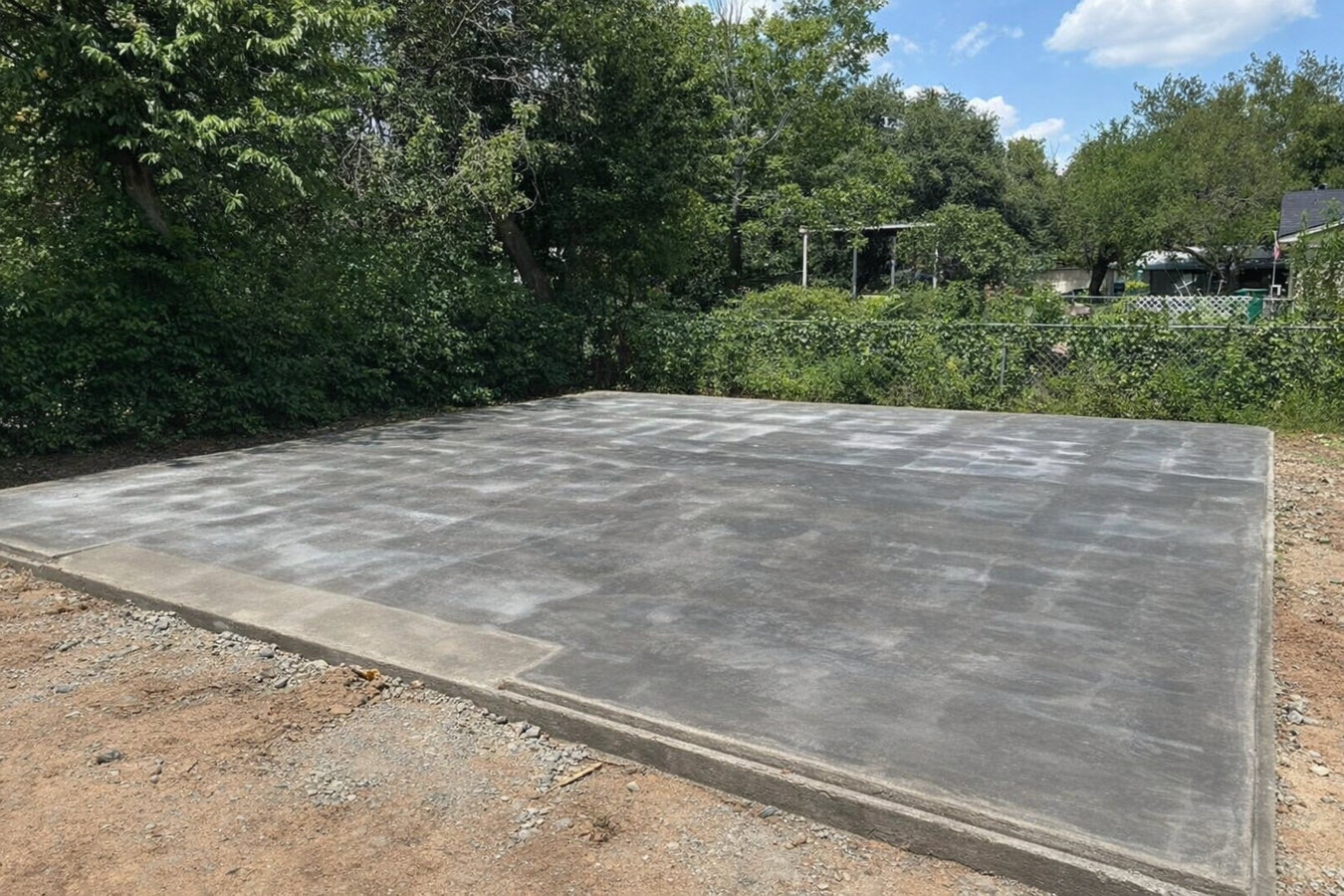
Slab foundation building in New Brunswick covers site grading, soil compaction, gravel base, moisture barrier, rebar placement, forming, pouring, and finishing - most jobs run three to five weeks from permit application to a fully cured, inspection-approved slab.
A slab foundation is a single concrete platform poured directly on the ground that serves as both the floor and the structural base for whatever sits on top of it. There is no crawl space or basement underneath - the structure rests entirely on the slab. In New Brunswick, this is the most common foundation choice for new detached garages, ground-floor room additions, and accessory structures. Many homeowners building an addition find it useful to consider foundation installation alongside this work when the project scope calls for a full basement or crawl space alternative.
New Brunswick requires a construction permit before any foundation work begins. We handle the permit application, coordinate the required city inspections, and give you a paper trail showing the foundation was built to code - which matters when you sell or refinance.
If you are planning to build anything new that sits on the ground - a detached garage, a sunroom, a ground-floor addition - you almost certainly need a new slab. In New Brunswick, where lots are small and structures sit close together, this is one of the most common reasons homeowners call. Without a proper slab, any structure you build will shift, settle, and eventually become unsafe.
Small hairline cracks in a concrete floor are normal. But cracks wider than a quarter inch, diagonal cracks from corners, or sections that have shifted up or down relative to each other suggest a structural problem. In New Brunswick's clay-heavy soils, this movement is often caused by soil expanding and contracting with moisture changes over many years.
If water consistently pools against the base of your home or garage after a storm, the ground is not draining properly - and that standing water works against the concrete underneath. This can signal that the original slab lacked adequate drainage preparation, or that the surrounding grade has shifted over time. New Brunswick receives about 47 inches of rain per year, so drainage is not a minor concern.
Some older New Brunswick homes have partial crawl spaces that homeowners want to convert into usable rooms. In many cases, this requires pouring a new concrete slab floor over the existing ground. If you are planning this kind of conversion, the slab pour needs to happen before any framing or finishing work begins.
We handle the entire slab process under one contract: grading the ground, compacting the soil, laying a gravel drainage base, installing a plastic moisture barrier, placing steel reinforcing bars or wire mesh, setting forms, pouring the concrete, screeding and finishing the surface, and saw-cutting control joints. Every slab we pour includes footings - the thickened edges that carry the load of the walls above. In central New Jersey, those footings must extend below the 36-inch frost line so freeze-thaw cycles do not heave the foundation upward over time. We also handle the concrete footings as an integrated part of the slab work rather than as a separate step.
New Brunswick's dense urban lots often create access challenges - narrow driveways, overhead wires, and streets that make it difficult for a standard concrete truck to reach the pour site. On tight lots, a pump truck may be needed to move concrete from the street to the slab location. We assess access during the estimate visit and account for it in the price, so there are no surprise charges on pour day. We pull the permit, schedule inspections, and give you a signed-off project with city documentation.
Best suited to homeowners adding a detached or attached garage on a New Brunswick lot, including soil prep and footing depth for local frost conditions.
For room additions or sunrooms that need a new concrete base connecting to or running alongside an existing older foundation.
Workshops, storage buildings, and other outbuildings that need a flat, stable concrete floor without a full basement below.
For New Brunswick homeowners converting an existing crawl space or partial basement area into finished living or utility space.
New Brunswick sits in Middlesex County on a mix of urban fill, glacial till, and clay-bearing soils. Clay soil expands when wet and shrinks when dry, which puts pressure on a slab from below throughout the year. The freeze-thaw cycles typical of central New Jersey winters - where temperatures swing above and below freezing repeatedly from December through March - can heave a slab built with shallow footings within just a few winters. Getting both the soil preparation and the footing depth right from the start is the difference between a slab that lasts decades and one that needs repair in five years. The city also runs the permit process through the New Brunswick Construction Office, and experienced local contractors know how to keep that process from stalling your project.
We serve homeowners across New Brunswick and the surrounding region, including Piscataway and Edison. Both towns share similar soil profiles with New Brunswick, and our crews are familiar with the permit and inspection requirements across Middlesex County.
We ask a few basic questions - what you are building, roughly how large the slab needs to be, and what access looks like - then schedule a free on-site visit. We respond within 1 business day. A site visit is required before any firm price is given, because soil conditions and lot access affect cost.
After the site visit, you receive a written estimate covering all costs - permit fees, site prep, the pour, and any pump truck requirements. Once you approve, we file the permit with the City of New Brunswick and build the approval timeline into the schedule.
The crew arrives to grade, compact, lay gravel, install the moisture barrier, and set rebar before any concrete is ordered. The actual pour follows on its own day. Plan for a blocked driveway and active work for most of that day - it moves fast once the truck arrives.
After the pour, the city inspector reviews the work. You can typically walk on the surface within 24 to 48 hours, but the slab should not carry heavy loads for at least a week. Full strength takes about 28 days. We coordinate the inspection and give you the final documentation.
Free on-site estimate. We handle the permit. No surprise charges on pour day.
(732) 633-0675Central New Jersey's frost line sits around 36 inches deep in Middlesex County. Every slab we build includes footings that reach below that depth, so freeze-thaw cycles cannot push the foundation upward. We give you the footing spec in writing before the project starts - not just a verbal promise on-site.
New Brunswick requires a permit and at least one city inspection before and after the pour. We file the permit ourselves, build the approval time into your schedule, and coordinate the inspector visit - so your project never stalls waiting on paperwork. You receive copies of all permit documentation.
Middlesex County's clay-heavy soils expand when wet and shrink when dry. We assess your specific lot before giving you a price. If the ground needs extra compaction, a thicker gravel base, or additional prep, you hear about it during the estimate - not as a change order mid-project.
New Brunswick lots are tight. Narrow driveways, overhead wires, and parked cars can make standard concrete truck access impossible. We have worked on urban lots throughout the city and know when a pump truck is the right tool. That cost is reflected in your original quote - not added on pour day.
The American Concrete Institute sets the industry standards for residential slab construction, and our work follows those guidelines on every pour. When you combine local soil knowledge, proper frost-depth footings, and a fully permitted process, you get a slab that holds up through New Jersey winters for decades - not just the first few seasons.
Full foundation installation for homes and additions requiring a basement or more substantial below-grade structure than a slab.
Learn moreStandalone footing work for posts, columns, and structural supports that need a properly sized concrete base.
Learn moreSpring and summer fill up fast - contact us now to get your estimate scheduled and permit in process before the busy season.