Loading...
Serving New Brunswick, NJ and surrounding areas. (732) 633-0675
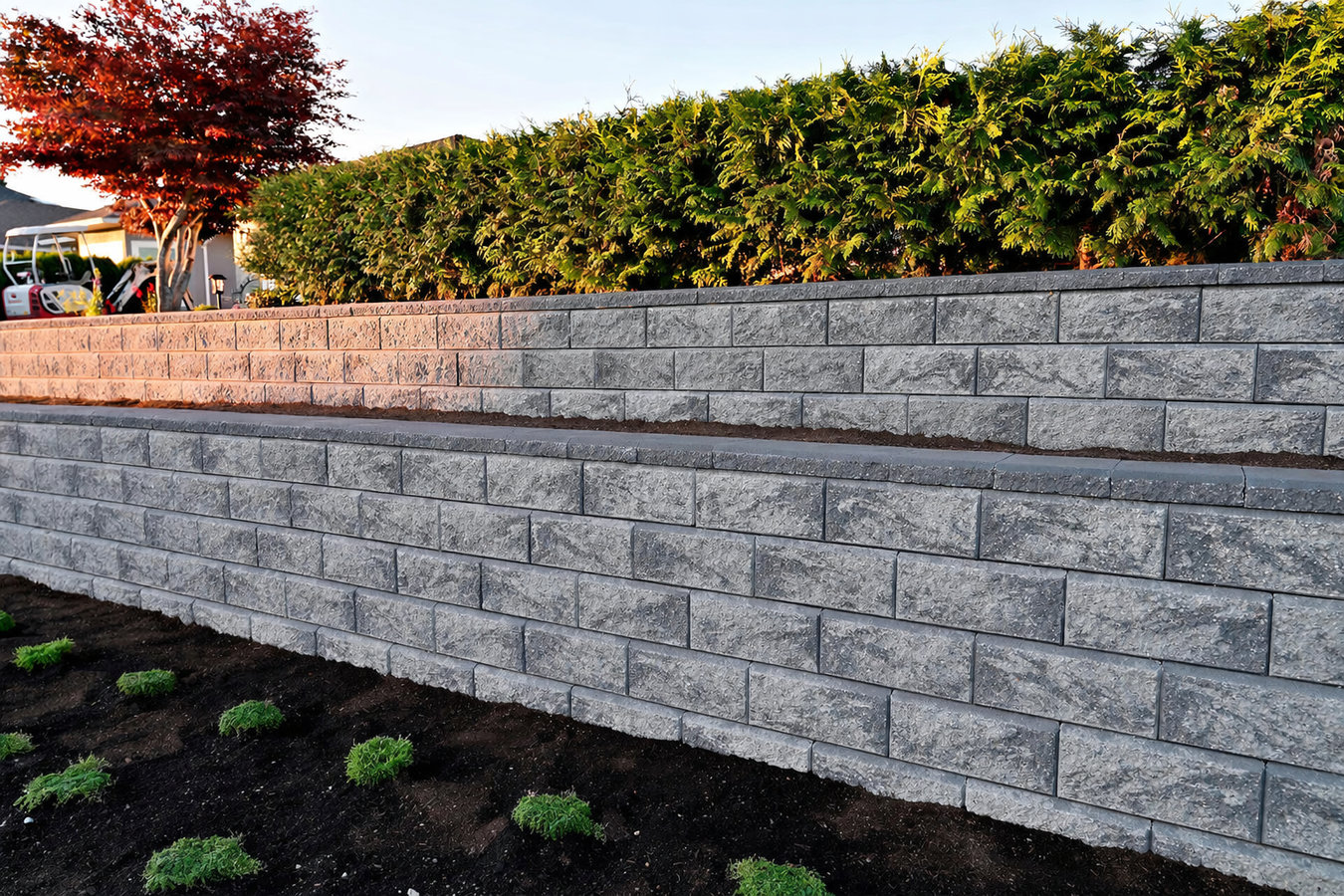
Soil washing away on a slope, an old wall leaning outward, water running toward your foundation - these are fixable problems. We build concrete retaining walls that hold your yard in place and last through New Jersey winters.
Concrete retaining walls in New Brunswick hold back soil on a slope so it stops eroding, protects your foundation from water runoff, and can turn a steep, unusable yard into level outdoor space - most residential wall projects take two to five days of active construction once permits are in hand.
If you have a sloped lot and you have been watching it slowly lose soil every time it rains, or if an existing wall is starting to lean, you already know something needs to change. Concrete walls are among the most durable options available - built correctly with proper drainage, they can last 50 years with minimal upkeep. Many homeowners pair retaining wall work with concrete floor installation for a basement or utility area at the same time.
In New Jersey, walls over four feet tall require a building permit and, in many cases, an engineer stamp. A contractor who skips this step is putting your property at risk. We handle the permit process as part of every project.
Bare patches appearing on a slope, or soil collecting at the bottom of a hill near your driveway or foundation after it rains, means erosion is already happening. New Brunswick gets significant rainfall year-round, and without something holding soil in place, a sloped yard keeps losing ground until it reaches your foundation.
A retaining wall tilting forward or showing horizontal cracks is telling you it is under more pressure than it can handle. This is especially common on older New Brunswick properties where walls were built without proper drainage - water has been building up behind the wall for years. A wall that is already moving can fail quickly.
New Brunswick winters can cause soil on a slope to creep downhill over time through freeze-thaw pressure. If the ground near your home looks uneven, or if doors and windows that used to work fine are now sticking, soil movement may be pushing on your foundation. A retaining wall uphill from your house stops that movement.
When a sloped yard has no wall holding soil back, rainwater follows the slope straight toward your foundation. Persistent water in your basement or wet spots along the base of your house after storms often trace back to yard grade directing water the wrong way. A wall combined with proper grading redirects that water.
We handle every step - permit application, excavation down to the frost line, forming or block-laying, gravel drainage installation, and backfill compacted in careful layers so it does not settle unevenly. Proper drainage behind the wall is not optional; it is the single most important factor in whether a wall lasts. Every project includes weep holes or drainage channels so water escapes before pressure builds. For homeowners who want level outdoor space, we can pair retaining wall construction with concrete steps construction to complete the grade change with safe, built-in access.
We work with both poured concrete and concrete block (CMU), and we will recommend the right approach for your site conditions, wall height, and budget. Poured concrete suits taller walls and tight timelines. Block walls are a strong choice when aesthetics matter and access allows careful placement. Either way, you get a written quote that breaks down exactly what is included, from demolition of any old wall to final cleanup.
Best for taller walls and sites where maximum strength is the priority - formed and poured in place.
A durable option suited to homeowners who want a more finished look or modular flexibility in their yard design.
We tear out failing existing walls, haul the debris away, and start fresh with a properly engineered replacement.
Gravel backfill and weep holes are included on every project - not an add-on - because drainage is what makes a wall last.
New Brunswick sits in a climate zone where temperatures drop below freezing and rise again many times each winter. That freeze-thaw cycle causes the ground to expand and contract, which pushes against retaining walls from behind. A wall with a shallow footing - one that does not sit below the frost line of roughly 36 inches in Middlesex County - will shift or crack within a few winters. Older New Brunswick properties are especially at risk: much of the city was built before modern drainage and footing standards were common, and many existing walls were never properly engineered to begin with. Parts of Middlesex County also have clay-heavy soils that hold water instead of draining freely, which means pressure behind a wall builds faster here than it would in sandy soil.
We work across New Brunswick and the surrounding region, including Piscataway and Woodbridge. We understand local soil conditions, the city permit process, and what it takes to build a wall that survives here long-term - not just the first season.
We ask a few quick questions about your slope, existing wall if any, and access, then come see the property in person. We respond within 1 business day. A site visit is required before any firm number is given - phone quotes on wall projects are rarely accurate.
After the visit, you receive a written itemized quote covering excavation, materials, drainage, and cleanup. If your wall needs a permit from the city, we handle the application - budget one to three weeks for approval before work can begin.
The crew digs the base below the frost line and sets the footing. This is the most disruptive-looking phase - there will be a trench and piles of soil. It typically takes one to two days and always looks worse before it looks better.
The wall goes up with gravel and drainage material placed behind it as work progresses. Soil is then backfilled in compacted layers. After poured concrete, the wall needs about a week to cure before backfilling or landscaping begins.
We respond within 1 business day. There is no obligation - getting an estimate costs you nothing. After you submit, someone from our office will call to schedule a time to see your yard.
(732) 633-0675Middlesex County engineers specify a frost depth of roughly 36 inches. Every wall footing we install goes below that depth. A footing that sits too shallow will shift within a few winters - which is the most common reason walls fail on older NJ properties.
We install gravel backfill and weep holes on every retaining wall, not as an upsell but as a standard part of the work. Water buildup behind the wall is the top cause of wall failure. Our walls are built so that water escapes before it becomes a problem.
We file the permit application with New Brunswick's Division of Inspections and Enforcement, coordinate with the city, and ensure the work passes final inspection. You do not need to call the building office once. Check contractor registration status at NJ Division of Consumer Affairs.
Parts of Middlesex County have clay-heavy soils that hold water and accelerate pressure on walls. New Brunswick also has a large stock of pre-1970 homes with walls that were never properly drained. We understand both conditions and build accordingly.
Every one of these factors - frost depth, drainage, permits, soil conditions - shows up on a real retaining wall project in New Brunswick. We have built walls here and we know what it takes for them to last.
For New Brunswick building permit information, see the City of New Brunswick Division of Inspections and Enforcement. For wall drainage standards, the Federal Highway Administration retaining wall guidance is a useful reference.
New basement and garage floor slabs - a natural next step once your yard is graded and your retaining work is complete.
Learn moreSafe, built-in access up or down a grade change - often installed alongside a new retaining wall on sloped lots.
Learn moreSpring contractor schedules in Middlesex County fill quickly - reach out now and lock in your project before the busy season closes up.